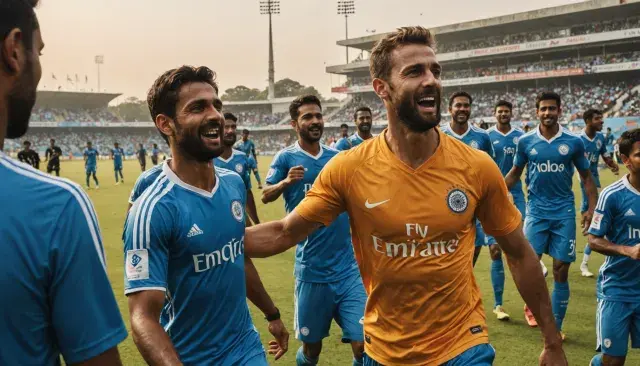
Ryan Williams, a 32-year-old midfielder, recently admitted with a chuckle that learning Hindi remains a challenge despite his central role in India's national football setup. Born in Perth to a family with deep ties to Indian football, he became the first player in over a decade to relinquish a foreign passport for Indian eligibility. His rapid integration highlights how personal heritage can bridge international divides in global migration patterns for athletes.
Family Legacy Fuels Unconventional Path
Williams hails from a lineage steeped in football across continents. His grandfather Linky Grostate delivered the decisive goal for Mumbai in the 1956 Santosh Trophy semi-final against Bengal, embedding early Indian connections. His mother Audrey competed for Western Australia after relocating in 1974, while father Eric pursued coaching in Myanmar and Malaysia. Older brother Rhys earned 14 caps for Australia after youth stints with Wales, and twin Aryn appeared for Imphal's NEROCA FC in India's I-League from 2017 to 2019. This heritage, spanning generations and borders, underscores the pull of ancestral roots in shaping individual choices amid Australia's superior football infrastructure.
Overcoming Barriers in a Multilingual Environment
Within India's national camp, Hindi dominates conversations, contrasting with the more English-friendly setting at Bengaluru FC. Williams picks up phrases and grasps general discussions, yet coach Khalid Jamil often checks his comprehension during Hindi briefings, prompting apologetic responses. He vows to improve, turning a literal language gap into light-hearted camaraderie. This dynamic reveals broader challenges for expatriates adapting to host nations, where fluency influences team cohesion and cultural immersion.
Club Rivalries Yield to National Unity
Debuting in Kochi, home to Kerala Blasters—fierce rivals of his Bengaluru FC—Williams experienced a shift from hostility to embrace. Absent the prior season due to injury, he recalled initial visits as oppressively humid and unwelcoming for opponents. Yet local supporters set aside allegiances, cheering him as one of their own during the national duty. Such moments affirm how collective identity often supersedes local divides, fostering inclusion for newcomers in stratified fan cultures.
Long-Term Commitment Amid Modest Prospects
A "live for the moment" outlook defines Williams, who expresses no regrets over his nationality switch despite India's distant 2031 AFC Asian Cup horizon—at age 37. Family significance, coupled with the allure of international representation, outweighed Australia's advantages. This decision reflects rising trends of dual-heritage individuals prioritizing underrepresented nations, potentially revitalizing programs through fresh talent and dedication.